

A secure wireless mesh network is an ideal way of offering video relay, voice intercom, and data exchange without relying on cellular communication towers or conventional internet infrastructure.
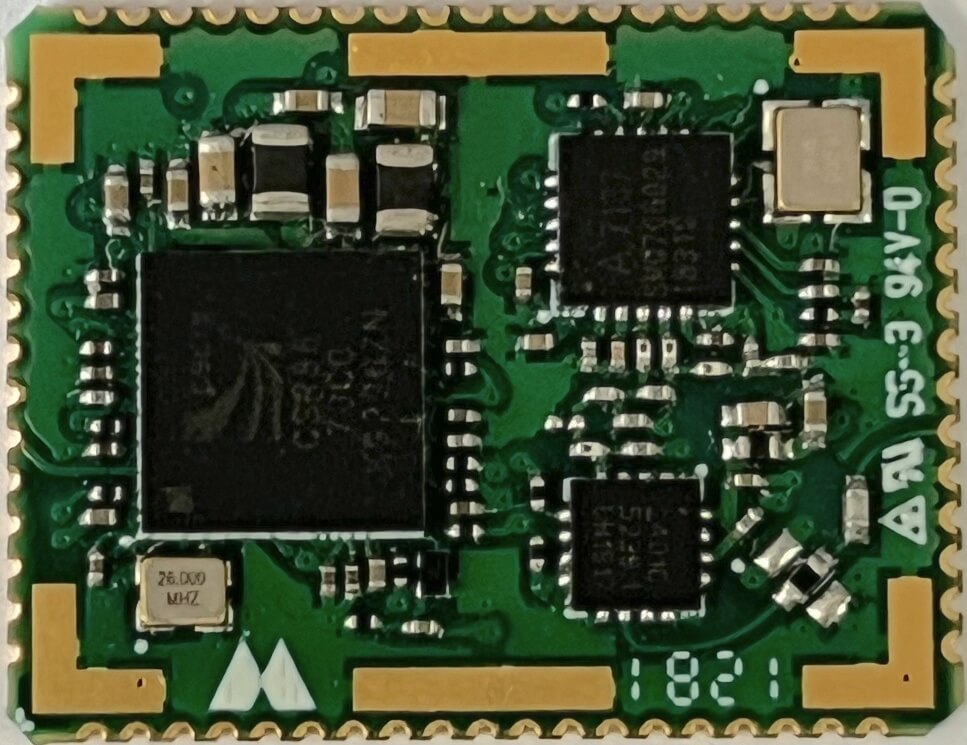
ElaraTek offers a tiny (21mm x 17mm) low-power dynamic mesh module for rapid prototyping of mesh-enabled products. Multi-channel, multi-node relay of video, voice, and data with highly secure AES-256 encryption implemented in the DSP. A self-healing dynamic mesh protocol with auto-search and connect with group members, while dynamically optimizing the RF links between nodes in real-time. Wideband voice with virtually unlimited users per channel with 5 simultaneous talkers. Video relay to extend the reach for robots and drones, adding hundreds of meters per hop. Provision to mix streams and to relay device control data across the mesh network.
A key capability is video relay for robots and drones. Instead of limiting communication to a single wireless link, the mesh network can relay video through multiple nodes. Each additional hop can extend the practical reach by hundreds of meters, depending on the RF environment and system implementation. The same mesh can also carry device-control data, allowing commands and video/data streams to travel across the network.
How a Wireless Intercom Without Cellular Network Works
Device-to-Device Communication
A cellular-free wireless solution uses proprietary radio communication rather than depending on a mobile carrier. Compatible devices within a secure group can transmit and receive video, voice, and data within the operating range of the system. In a mesh implementation, device-to-device communication enable nodes to relay traffic to other members within the group.
Dynamic Wireless Mesh Networking
A dynamic mesh architecture creates multiple communication paths between participating nodes. The network can automatically search for and connect with group members and dynamically optimize RF links between nodes in real time. If a path changes or becomes unavailable, the self-healing mesh protocol adapts the network topology to maintain connectivity where an alternative path is available.
Multi-Channel, Multi-Node Voice, Video and Data Relay
The featured mesh module is designed for multi-channel and multi-node communication. It can relay voice, video, and data across the mesh. Wideband voice supports virtually unlimited users per channel, with up to five simultaneous talkers.
Video Relay for Robots and Drones
Video relay is an important extension of mesh communication for robotics and unmanned systems. A robot or drone can send video to a remote operator through intermediate mesh nodes rather than relying on one direct wireless link. This multi-hop approach can add hundreds of meters of reach per hop, subject to RF conditions and system configuration.
The mesh can also relay device-control data. This means a remote operator can send control commands across the same network while receiving video or other data from the robot or drone. The ability to mix streams and relay control data can support applications where real-time situational awareness and device control are required.
Secure Communication with AES-256
Security is important when voice, video, and control data are transmitted across a wireless network. The featured module implements AES-256 encryption in the DSP, providing the highest standard of encryption for mesh communication. System designers should still evaluate the complete product architecture, authentication, key management, firmware security, and deployment requirements for their specific application.
Low-Power, Compact Mesh Module
The compact mesh module is ideal for rapid prototyping and integration into many products. Its low-power feature is particularly suitable for battery-operated devices such as wearable communication equipment, headsets, PTTs, robots, drones, and other products where size and power consumption matter.
Self-Healing Connectivity and Real-Time RF Optimization
A self-healing dynamic mesh protocol helps the network respond to changing conditions. The system can automatically search for group members, establish connections, and dynamically optimize RF links between nodes in real time. This architecture is essential for mobile devices where node positions and RF conditions can change dynamically during operation.
Stream Mixing and Device Control
The module provides a provision to mix communication streams and relay device-control data across the mesh network. This can allow different types of traffic, such as voice, video, telemetry, and control information to operate within the same mesh architecture, subject to the firmware configuration.
Applications
Robots / Drones: Extending video relay by hundreds of meters per hop via intermediate mesh nodes. The network relays device-control data from the operator to the remote unit and relays the video back to the operator in real-time. The number of hops can be increased by reducing the resolution of the video.
Drone Swarms: Controlling several drones in different mesh network configurations, using a single controlling drone. In a line configuration, this can significantly extend the range and reach of the drones beyond the immediate RF link to the first drone. Multiple drones in matrix configuration can be used for search and rescue to identify survivals; monitoring the extend of areas affected by natural disasters; identifying changes in the environment compared to the reference image or inspecting large construction development.
Group communication: Supports multi-user HD voice intercom with AES-256 encryption for any number of users in a dedicated group, with up to 5 simultaneous talkers. Provision to link two independent intercom groups via cellular network or tactical radio.
Rapid prototyping: The mesh module offers a compact, low-power module with integrated firmware for prototyping and developing mesh-enabled products with rapid time to market, while online tools such as fontygen can support digital content and interface-related development.
What to Consider When Designing a Mesh-Enabled Product
Developers should evaluate RF range, node placement, antenna design, power consumption, latency, bandwidth, number of nodes, simultaneous traffic, security architecture, and the expected operating environment. For robot and drone video relay, available bandwidth and RF conditions are especially important due to video transfer requiring substantially more bandwidth than voice or control data.
Conclusion
A compact dynamic mesh module can provide a practical foundation for products that need decentralized voice, video, and data communication without cellular infrastructure. The featured wireless mesh module combines a 21 mm × 17 mm low-power form factor with multi-channel, multi-node relay, AES-256 encryption, self-healing mesh architecture, automatic group-member discovery, and real-time RF link optimization.
For robots and drones, the added capabilities are particularly valuable. Extending video links by hundreds of meters per hop while maintaining real-time positioning control; and remotely controlling swarm drones to monitor large areas to identify changes in the environment.